Showing posts with label writing is hard. Show all posts

September 28, 2014

George Orwell - Writing is hard, Ctd


George Orwell's1984 is the classic of classics. One of the most celebrated book in the English canon that speaks and sells powerfully to this day. Yes 1984 is a classic. Yet for Orwell, the writing of it was most testing. Early drafts were seen by Orwell as "ghastly" and "dreadful" messes. While writing 1984 in May 1947, Orwell wrote to his publisher Fred Warburg: 
"Of course the rough draft is always a ghastly mess bearing little relation to the finished result, but all the same it is the main part of the job."

August 27, 2014

Sean O'Casey - Writing gets harder the more you do it

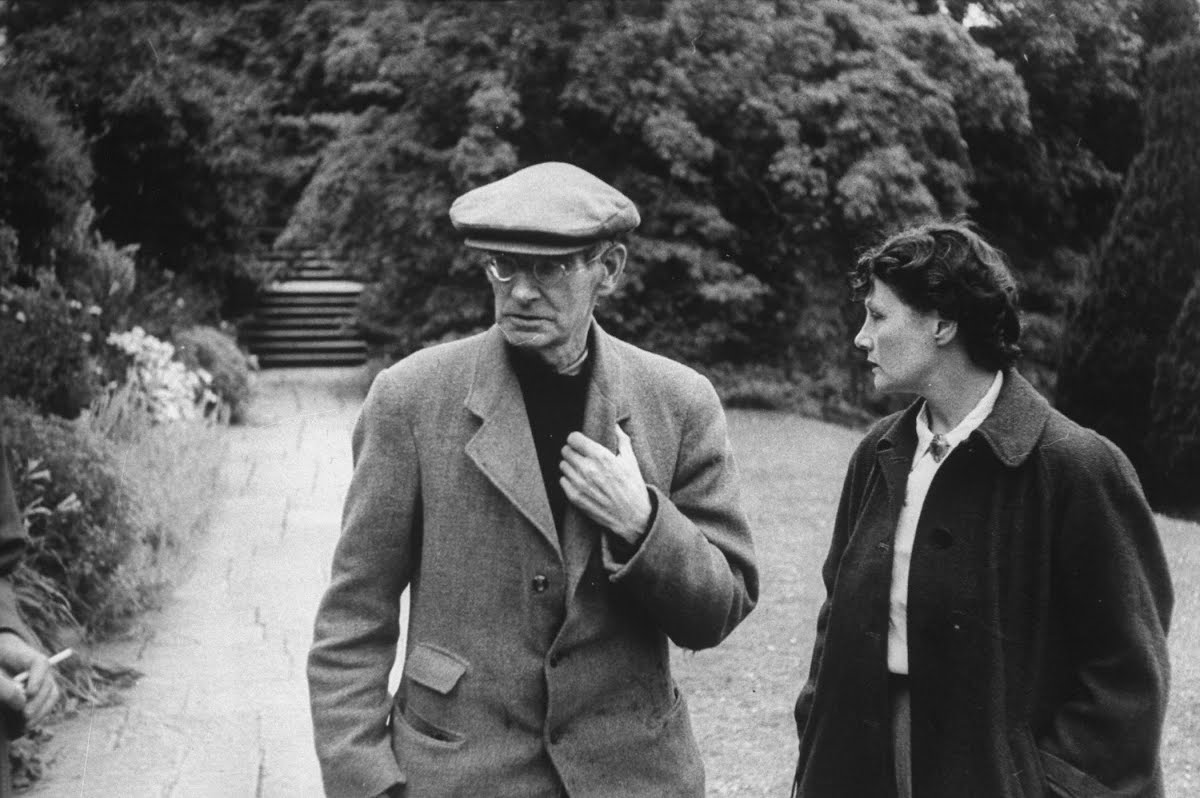
Irish writer Sean O'Casey and his wife Eileen Reynolds
Sean O'Casey, playwright born in the tenement slums of Dublin, said:
"When I write a new play. When I sit down to try to write a new play, I’ve had the experience of many plays before. Yet that new play that I am going to try to write gives me the same agony, the same trouble, the, same effort, the same Herculean work as the very first play I ever wrote gave to me."
Christopher Hitchens said the same thing:
"I hate to agree with George Will about this… The truth is, yes there is nothing like not writing for making you unhappy and if you have the compulsion then the only problem that you’ll have is, you surrender to this compulsion more and more and, you’ll find [writing] gets harder the more you do it. That seems a shame. It should get easier, it should become more like a facility for example. It becomes more difficult and it becomes more difficult because you are reading more and more work by better and better people and you’ve lost the sheer nerve and the blind solipsism that allowed you to think you could try it when you were young before you had made any proper comparisons. So it gets much more nerve wracking and much more difficult in every way costly for you and no doubt for your readers."
Samuel Beckett on writing more generally said in 1954:
"It’s hard to go on with everything loathed and repudiated as soon as formulated, and in the act of formulation, and before formulation."
Beckett also wrote:
"I realized that Joyce had gone as far as one could in the direction of knowing more, [being] in control of one’s material. He was always adding to it; you only have to look at his proofs to see that. I realized that my own way was in impoverishment, in lack of knowledge and in taking away, in subtracting rather than in adding."

June 05, 2014

Hunter S. Thompson - Typing out the work of the best writers

Airman (2nd class) Hunter S. Thompson before his (honourable) discharge from the USAF in 1958.
Porter Bibb, a childhood friend of Hunter S. Thompson explained (8m) how the famous writer immersed and smothered himself in the work of many of the most famous writers of all time. He said:
"He chose, rather than writing original copy, to re-type books like The Great Gatsby and a lot of Norman Mailer, the Naked and the Dead, a lot of Hemingway. He would sit down there on an old type-writer and type every word of those books and he said, "I just wanna feel what it feels like to write that we'll."
Speaking with Charlie Rose in 1997, Hunter explained (9m) how this worked:
"If you type out somebody's work, you learn a lot about it. Amazingly it's like music. And from typing out parts of Faulkner, Hemingway, Fitzgerald - these were writers that were very big in my life and the lives of the people around me - so yea I wanted to learn from the best I guess."

June 03, 2014

David Remnick - Writing is hard, Ctd


The editor of the New Yorker Magazine David Remnick was speaking with David Carr (@Carr2n) of the New York Times and explained how writers find writing hard but that he finds writing comes easy for him. He said at 6 minutes:
"I'm very different from a lot of other writers I know and I also think this has been a problem for me, learning how to be an editor. I find the act of writing immensely pleasurable, and most of the writers I know spend an enormous amount of time talking about how much they hate to write, the suffering of writing and there's almost this competitive thing among writers, how much fetching they can do about how [writing is hard] - and I don't doubt that writing is hard, in fact maybe if I found it a lot harder and suffered more I'd be better at it. I don't know. But I found it and find it enormously pleasurable to be in a room by myself doing that with notes."
Video in full here. Previous articles in the series with Charles M. Blow here, with David Baddiel and Edna O'Brien here. Jason Alan Murdock here, with Alex Massie here, with Gideon Lichfield here, with Tim Kreider here, with Christopher Hitchens here, with American author Stanley Karnow here, with Ernest Hemingway here, with Neil Gaiman here, with James Joyce here, with Dan Brown here. My piece that looks at George Orwell's 6 rules to good writing is here. I also wrote a piece on The Huffington Post here.

I've also posted here about the propensity for law school to teach law students to write badly here. I made The Case For Plain English here. I've also written a few pieces, including here, on Writing on Paper as a way of making the writing process easier. Apparently blogging is an art form, seehere.

May 30, 2014

The writer can never really stop, Ctd


Edna O'Brien said:
"I think that all writers are like that – your mind is always galloping, trying to write the thing you cannot write. That is one of the characteristics, one of the norms of writing."
Northern Irish poet and writer Nick Laird said in 2005:
"When I was a lawyer… I never stopped writing reviews and poems and articles. I’d do it in my lunch hour or after work. It didn’t matter how tired I was.
In January 2014 Nick said:
"I’m working on poems all the time. I was writing a poem this afternoon, before I came here. I’ve got other work—teaching at Princeton, writing articles and so on—but I’m pretty much always working on a poem." 
Precious post with Christopher Hitchens here.

May 27, 2014

David Baddiel - Writing is hard, Ctd

In May 2014 David Baddiel (@Baddiel) spoke on Radio 4, Open Book with Mariella Frostrup and said:
"I am very distractable. I could get empires built in literary terms if I didn’t constantly get distracted. Constantly look at the Internet."
He wrote in 2010:
"I make sure I write something every day but it comes after hours of p***ing about, making tea, reading stuff on the internet and taking the children to school. A lot of the time I just look out the window. I listen to music on Spotify a lot, which takes 25 minutes to choose what to listen to then another 25 minutes of listening to Spotify's suggestions. Dave Gorman said the problem with writing now is the internet is there, it's a window on the world and you want to look through it especially when there are a lot of naked women through that window. It's incredible anyone gets anything done any more."
Edna O’Brien said:
"[The book] was hell to do. They’re all hell to do." - 

February 17, 2014

@Jason_A_Murdock - Writing is hard, Ctd

Editor of Northern Ireland's digital journal Off The Record, Jason Alan Murdock (@Jason_A_Murdock) guest writes on The Ideas Workshop. He joins the 'Writing is Hard' series and shares his thoughts.

Writing Is Hard

​Starting off a 'writing is hard' segment with the proclamation that the literal process itself isn't actually that difficult seems like a bit of a cop out. But bear with me. Writing is a process many learn at a young age. At its most basic it is letter after letter, word after word. But before I start to sound like the world's worst substitute teacher I will say that using these familiar words and letters in a constructive, meaningful and emotive way can be a very difficult task indeed. Many have grappled with turning words into 'art' or something resembling a legacy. Orwell, Hitchens, Salinger, Yeats, Frost – men all recognised by their surnames alone – live beyond the ashes because of their ability to craft powerful sentences. The human body can rot, but the written word lives on. It must be said however, that whether you find writing hard or not will depend on your intentions. After all, there exist many crafts that use words as a tool and some will be harder to master than others. It could be journalism, poetry, short stories, blogging, comic sketches or writing a book or novel – all demand different skills, techniques and various blood/alcohol levels.

January 06, 2014

Writing is hard, Ctd

Read Gideon Lichfield in the tweet above. See what he says about "throat clearing." Well, writing can be very hard. Perfectly hard enough to not require the extra difficulties that are of the perfectly avoidable kind. People often have the habit of coating their writing with introductory layers of fluff that mask for an introduction. According to Lichfield: avoid the throat clearing. 

My previous posts in Writing is hard series are here with Alex Massie, with Tim Kreider here, with Christopher Hitchens here, with American author Stanley Karnow here, with Ernest Hemingway here, with Neil Gaiman here, with James Joyce here, with Dan Brown here. My piece that looks at George Orwell's 6 rules to good writing is here. I also wrote a piece on The Huffington Post here.

I've also posted here about the propensity for law school to teach law students to write badly here. I made The Case For Plain English here. I've also written a few pieces, including here, on Writing on Paper as a way of making the writing process easier. Apparently blogging is an art form, see here.

November 14, 2013

Writing is hard, Ctd Alex Massie

October 28, 2013

Writing is hard, Ctd


"Writing beats baling hay or going door-to-door for a living, but it’s still shockingly unenjoyable work."

By Tim Kreider on not giving your work away for free via Austin Kleon here.

July 17, 2013

Writing is hard, Ctd "If you enjoy writing you're doing something wrong..."


The late American journalist and author Stanley Karnow said the following of writing in a panel discussion on writing, 'How to Become a Writer' (1997) which you can watch here. He said:
"If you enjoy writing you're doing something wrong."
He was also quoted by the moderator as follows:
"I don't know any writer that thinks that writing is any fun."
He went on to quote Hemingway who told him that:
 "The art of writing is knowing what to throw away."

July 04, 2013

"[Writing and] Art is theft", Ctd


Maria Popova puts it, citing Charles Eames, wonderfully:
'I’m particularly taken with this bit affirming remix culture and combinatorial creativity:
"[Is design] a creation of an individual?No — because to be realistic one must always admit the influence of those who have gone before." 
Read it here.

July 02, 2013

Writing is hard Ctd with Ernest Hemingway


I produced the illustration of Mr Hemingway that you can see above recently with a comforting quote that soothes the disgruntled writer, blogger and other word maker:
"There is nothing to writing. All you do is sit down at the typewriter and bleed."
Powerful and emotive language that tells us even Nobel Prize winning writers struggle to put words onto paper. Then just as I was coming to publish this I came across a Brainpickings blog post by Maria Popova, 'Work Alone: Ernest Hemingway’s 1954 Nobel Acceptance Speech.' The stand out quote was the below. Not only is writing hard; it can be and often is a lonely process:
“Writing, at its best, is a lonely life.”

June 28, 2013

Writing is hard Ctd Neil Gaiman on writing on paper


On a June 23 episode of Open Book on Radio 4 Mariella Frostrup talked with Anglo-American writer Neil Gaiman. One of the first writers to blog and one of the most prolific on Twitter, Neil is well known for his children books and his famous commencement speech, 'Make Good Art.' So good it is that it's been turned into a book.

Anyway, Mariella asked Neil: "You seem like a very linked-up, Twitter friendly 21st Century writer, so I was amazed to read that you still work your first draft by hand. Is this right and why? Neil Gaiman responded:
"I absolutely write first drafts by hand. And in fact, in this linked up age when your computer is not just something you work on but something that your plug into the world through and the world can get to you through.  
It's almost for me an act of defence.  
When I'm sitting there and writing by hand with a fountain pen in a notebook nobody can put message on my screen. Nobody can tell me important things. I I get the urge to go and check how a particularly unfamiliar word is actually spelled, I'm not going to look up an hour an a half later when I've just bought something I didn't even want on eBay wondering how I got there through a particularly incantation of web pages.   
All of which I'm completely capable of doing on my computer. So for me I like the pace or writing in a notebook. And also I noticed in the early 90s that I felt that my writing was starting to bloat a bit. And I realised if I was writing anything directly into a computer I never seemed to delete things. I would just add things. 
The pieces grew and grew. Whereas if I write in a notebook and am transcribing it as a second draft I can find  2 or 3 pages that aren't very good. Then I just leave them out. I feel like I've saved myself a bundle of work. It's a fantastic feeling. And I'm the kind of writer who like to feel that he's making every word count."

June 20, 2013

Christopher Hitchens - A writer can never truly stop


Speaking on C-Span, Christopher Hitchens explained how a writer can never truly stop or switch off. For a writer is a professional without a set clock. A writer is person with a vocation who is always absorbing so that he or she can then hold a mirror up to society. A writer is above all this: a person with the responsibility to use their gift for they occupy an important role in society.
"If you’re a self-employed writer, there’s a tendency to always feel guilty anytime you’re not working, because you never quite know when you’ve stopped because you don’t have office hours or an employer."
From 22 minutes in the video above, also here. Also here.

June 18, 2013

Christopher Hitchens - Writing is hard


Christopher Hitchens explained how he finds writing most pleasurable when he sees it in print (33m20s):
"I don't really know if I [enjoy writing] or not. I hate not writing, I know that. I sort of do it because I feel I have to. Sometimes it's a real pleasure doing it. Usually the pleasure comes though when you see it in print. Not until then and usually not until some time after."
Then he explained how he writes:
"I write on table at home in long hand. I sometimes write in bars too, in the afternoon. I go out and find a corner of a bar. If the noise isn’t directed at me me I quite like it if the jukebox is on and people are shouting the odds about a sportsgame and I’m hunched over a bottle in the corner. I write in long hand anyway so I can do it anywhere. Sometimes in airport terminals. And then when I’ve got enough down I start to type it out, editing it as I go. I don’t use any of the new technology stuff."


And at 39m20s he explains how politicians aren't any smarter than the average man. Then at 40
Related Posts Plugin for WordPress, Blogger...