.jpg) |
| My illustrated tribute to Andrew Sullivan I drew for the Huffington Post. |

Showing posts with label Andrew Sullivan. Show all posts
Showing posts with label Andrew Sullivan. Show all posts
February 26, 2015
Andrew Sullivan and the conscience clause
January 28, 2015
Laydown liberalism
 |
| Cartoon by Martin Rowson |
"But Islam has nothing to do with this. There are just a few loonies who are suffering from false consciousness, and their real motivations are economic or personal or secular or just purely violent. You can believe that, if you want. Or you can pretend to believe it because it might be more pragmatic to do so. Or you can open your eyes. This is not to say that most Muslims support this kind of mass murder – and the global Muslim response was particularly encouraging. But it is to say that it is not a coincidence that so much terror and violence all over the world is currently being committed in the name of Islam. Some core parts of it are, quite simply, incompatible with post-Enlightenment thought and practice. And those parts have all the energy right now.
December 11, 2014
An American Democrat is a British Conservative
 |
| Via The Dish |
Andrew Sullivan wrote in November 2014 that 'A British Tory Is An American Democrat':
"Here’s an indication of just how far to the right the American political discourse is, compared with Britain – the developed country most in tune with American neo-liberalism (above). That’s why David Cameron and Barack Obama have long had such an easy relationship. Either one could fit easily into the other’s cabinet. And maybe it does help explain why I still consider myself a conservative. I am, as a Brit."
July 15, 2014
Andrew Sullivan (@SullyDish) on the Tuam babies
 |
| Cartoon by Martyn Turner |
Fintan O'Toole tweeted:
"[Ireland] locked up more people in psychiatric wards than Stalin's Soviet Union did."
"The Magdalene Laundries were really a kind of gulag for sexual miscreants."Another called it "Ireland’s architecture of containment". Then put it like this:
"You had these industrial schools, the Magdalene laundries, the mother and baby homes, all with different remits, but the basic model was to contain and segregate anything that was deemed morally inferior by society, whether that’s children, unwed mothers, the women in the Magdalenes, etc. The mother and baby homes were different in that they were regulated by the state and had to be accredited adoption societies, at least by 1952, which is when that became legal in Ireland. They received stipends from the day they opened, from the government. They were receiving the equivalent of an industrial wage at that time for each mother and baby, from the state. If that were the case, why were so many of these women, like my mother or Philomena Lee, expected to earn their keep if the state were in fact funding that? It really doesn’t make a whole lot of sense. Obviously there was some profit being made there, not to mention what half of our parents paid. That’s another story unto itself. Adoptive parents were “donating” huge amounts of money."
June 10, 2014
Glenn Greenwald (@ggreenwald) and gate-keeping the Snowden leaks

This is the charge repeatedly laid at Greenwald's door. Andrew Sullivan said it:
What the public knows and does not know about the NSA is determined by @ggreenwald, with no checks and balances: http://t.co/H5xAqP1RUb
— Andrew Sullivan (@sullydish) May 29, 2014
Greenwald flatly denies this charge, as he did here:
@sullydish That's false: 1) I collaborate w/editors & colleagues on every story; 2) WashPost, NYT, PP & Guardian all have much > 10,000 docs
— Glenn Greenwald (@ggreenwald) May 29, 2014
Yet Glenn Greenwald has always insisted on full editorial control. He started blogging in 2005 and by the time he reached Salon he maintained the self-direction and individualism of an independent blogger. This independence continued with his move to the Guardian. As he said:"I will write daily at the U.S. edition of The Guardian, which is based in New York, and will do so exactly the same way as I have here [Salon]: with full editorial independence and the same type of readership involvement and support upon which I’ve long relied, including a vibrant comment section. In addition to the daily writing, I’ll also write a more traditional once-a-week column there."Andrew Sullivan further wrote here:
"The way the US government has behaved since 9/11 – its outrageous and criminal secret activity – seems to me to tilt the question in favor of the whistle-blower and the journalist, and some legal leniency – certainly for the journalist. But in all times there is a balance between these two contradictory democratic necessities – government secrecy and transparency – and at some point, the rule of law is the rule of law. It’s not perfect, but it’s better than all the alternatives.
Right now, for example, what the public knows and does not know about the NSA is determined by Glenn Greenwald. He has in his possession vast troves of information that he is keeping secret, until he decides it will becomes public. He is picking and choosing what to divulge and doing so over an extended period of time. In that sense, he is close to being an alternative government, but without any internal checks and balances, and with no recourse for the public through the democratic system. What Mike is insisting is that this too is a genuine problem from the point of view of the public interest. Who gets to decide what the public knows? Right now, it’s Glenn. And I bet his security system for his data is extremely strong. He doesn’t want any leaks either, does he?"
June 07, 2014
Malcolm Jones - Art is theft, Ctd

"I learned to draw and paint on my own, and I did it by copying."He also said:
"I understood more about Vermeer by painting my own Vermeer… than I had ever learned by simply staring at his paintings."Oliver jeffers said the same:
"Any opportunity I get to see John Singer Sargent, I do. For technical ability. That’s how I learned how to paint, by dissecting his work and trying to work out, how does he make that look like an ear but he’s only done three strokes?"
Oliver Jeffers has previously spoken on art as theft here. Coco Chanel said:
"Only those with no memory insist on their originality."Andrew Sullivan wrote a piece, 'In defence of duplicating art'.
Previous posts, Julian Opie on art as theft here.
May 02, 2014
A good blog is your own private Wikipedia
Writing in the New Yorker, Ian Crouch (@iancrouch) wrote an article with an interesting headline, 'The curse of reading and then forgetting.' Ian Crouch explained a recent experience of reading and suddenly remembering:
"Recently, a colleague mentioned that she had been rereading Richard Hughes’s “A High Wind in Jamaica,” which was first published in 1929 and is about a group of creepy little kids who become the unwanted wards of sad, listless pirates. She praised it, and her recommendation sent me to Amazon. The title was familiar, as was the vibrant cover of the New York Review Books reissue. One cent and $3.99 for shipping, and the book was on its way. A couple of weeks later, I opened to the first page and started reading. By the fifth page, I realized that I had read this novel before, and pretty recently, about three years ago, when another colleague had also praised it and lent me his copy."
April 11, 2014
Understanding journalism and the proper role of the Fourth Estate
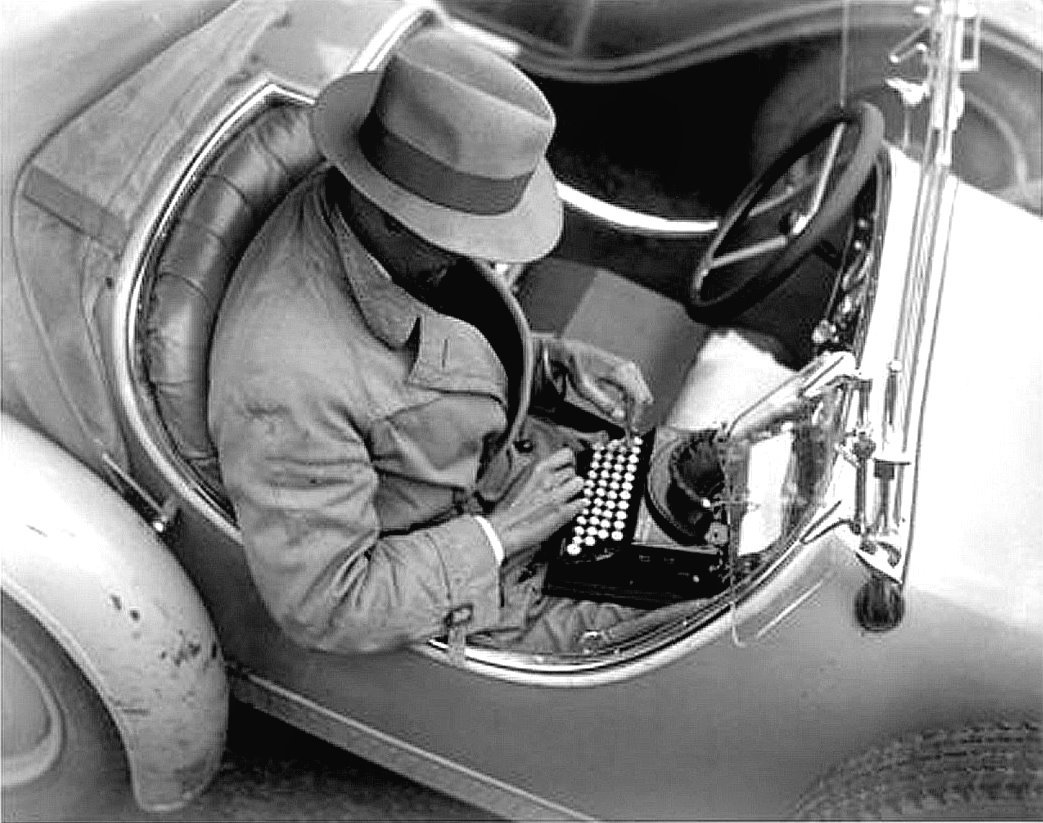
As Andrew Sullivan said, "Every now and again, it’s perhaps worth revisiting the entire definition of journalism." At present, journalism and the media is out of step with the original and traditional model. The traditional model is based on the premise, as Glenn Greenwald said, that:
"Basic to political science and the American founding and to human nature is that people cannot operate and exercise power without checks or they’ll inevitably abuse it."
As Daniel Ellsberg, the Edward Snowden of the 20th Centruy, said:
"Secrecy corrupts, just as power corrupts."
Therefore it falls upon journalism and the free press, Edmund Burke's "Fourth Estate", to shine a light upon the powerful and those who want to act in secrecy. Journalists are to be the adversaries and opponents of the powerful. Their job is to be in confrontation against, and not in collaboration with the government. Glenn Greenwald said July 2 2013 on Fox and Friends:
"Thomas Jefferson, 250 years ago, said those who most fear investigations are the ones who attack free press first. This is what journalism is about, shining a light on what the most powerful people in the country are doing to them in the dark. "
April 10, 2014
The relationship between money and words will be corrected, Ctd

Andrew Sullivan said during a March 2014 address to Harvard University on the fall of journalism to advertising and PR:
"Suddenly this great [internet] freedom became a great liability. [The internet] was destroying their profits. Eradicating lots of things they were able to do."Sinead Gleeson (@sineadgleeson) wrote an article in the Guardian on how writers are poorer and struggling to survive, eat, pay rent in the internet age. Joanna Kavenna was quoted as saying, ‘Being a writer stopped being the way it had been for ages. It wasn’t what I expected.’
Yet Shane Smith (@shanesmith30), VICE envisions a change and a correction in the relationship between words and money:
"Everything online is free, we have been a free magazine, everything we do online is free. I think we are going to move towards more of a subscription model. I think that young people are realizing that I’d rather be a part of it. You know Kickstarter has been really successful. On a business sense, on a philosophical sense, where people realize if I believe in something I’m going to actually be part of that. Which I think is incredibly positive. And I think that that’s going to be the next wave of how people are going to get things done online."
March 27, 2014
The great opportunity of new media journalism
This is for @otrjasona @Jason_A_Murdock @bartoncreeth @LyraMcKee and @dmcbfs. Please watch the video above.
Legacy media is moribund. Legacy media is on a journey of managaed and inexorable decline. It's steady as she sinks. Yes, the relationship between words and money is off. But it will be corrected.
The decline of legacy media isn't all a matter of money. The decline of legacy media is the making of two entirely avoidable circumstances.
One it has lost it's soul. It has capitulated to advertising and public relations. It has been co-opted by those who govern us. As George Orwell said:
"Journalism is printing what someone else does not want printed: everything else is public relations."Our press isn't this. Our press is flat, serving and servile. It isn't curious or courageous, partisan and adversarial. We need to fix that. Only a vigorous and voracious press will keep countries and governments honest. Our head of government, Peter Robinson wants the press to be more positive and cuddly. But if the press is accountable to Peter Robinson, who is Peter Robinson and our government accountable too?
Two, journalism has failed to iterate and innovate.
March 21, 2014
Glenn Greenwald - US violence is "noble" and "civilised" while Muslim violence is "primitive" and "without rational cause"
Following the murder of drummer Lee Rigby, bloggers Glenn Greenwald and Andrew Sullivan crossed keyboards and battled it out. The issue: Greenwald called it "a barbaric and horrendous act"; but fell short of calling it "terrorism". The premise being that Rigby was a soldier, not a citizen. Since America and Britain had declared the whole globe as a battlefield, the attack was a reaction to this. But as Glenn explained, by highlighting the cause, he does not seek to justify the act. As he said:
"People reflexively try to radically distort the argument beyond recognition in order to smear you as a Terror apologist, a Terrorist-lover or worse, all for the thought crime of raising these issues. To do so, they deceitfully conflate claims of causation (A is one of the causes of B) with justification (B is justified). Anyone operating with the most basic levels of rationality understands that these concepts are distinct. To discuss what motivates a person to engage in Action B is not remotely to justify Action B."He then approached the related issue that the west has a boundless compulsion to depict others as the "Uniquely Primitive and Violent Evil." He said:
"Our violence is understandable, noble, well-intentioned, necessitated by their pure evil. By stark contrast, their violence is sub-human, senseless, and utterly unrelated to anything we do."
March 17, 2014
Blogging has enormous depth, Ctd
I've looked at the US bloggers Andrew Sullivan (@SullyDish)and Glenn Greenwald (@ggreenwald) and Christopher Hitchens who all talked about the depth of blogging. I also looked at what Paul Krugman had to say about blogging. I've also looked the the UK legal bloggers David Allen Green (@JackofKent) and Adam Wagner (@AdamWagner1). The internet has had an incredible democratic and levelling effect. As Paul Krugman said:
"Academic credentials are neither a necessary nor a sufficient condition for having your ideas taken seriously... if someone without formal credentials consistently makes trenchant, insightful observations, he or she has earned the right to be taken seriously, regardless of background."All the above have attested to the depth, authority and veracity of the new medium. Daniel Hannan (@DanHannanMEP) added his voice to the debate:
"The separate categorisation of columnists, reporters, bloggers and interested readers is becoming meaningless. Every citizen is now a potential journalist. News and opinion are a conversation. We still hear occasional complaints from Leftie pundits that online media “lack quality control”. In fact, the dialectic element of blogging ensures a higher standard of accuracy than before. Mistakes are ruthlessly exposed and, because of the sheer number of outlets, a plausible new theory can spread with previously unimagined speed.
Blogs have improved veracity, quality and diversity. They have not led to the segregation by opinion that many predicted: Leftists and Rightists argue online in a way that never happened when people took just one newspaper. It's true that bloggers, being human, are as prone to cruelty, stupidity and error as anyone else. But it has never been easier to go elsewhere: more people are reading more news and comment than at any time in history."On what blogging is all about, Greenwald put it best:
"I began [blogging] without any plan to become a journalist or writer, but simply to participate as a citizen."
February 23, 2014
Ezra Klein, Glenn Greenwald, Nate Silver - The future of journalism?

Glenn Greenwald has created The Intercept. Nate Silver has left the NYTs to join ESPN where he is editor-in-chief of the FiveThirtyEight site. Bill Keller has left the NYTs to create a blog on the criminal justice system. Ezra Klein (@ezraklein) is launching a new venture with Vox Media. Felix Salmon (@felixsalmon) has said: "We’re at an excitingly early stage in working out how to best produce and provide news in a social world." I looked at Greenwald and his new enterprise here. Ezra Klein is who I want to look at in more detail. This is what Klein has said of his new venture:
"We are just at the beginning of how journalism should be done on the web. We really wanted to build something from the ground up that helps people understand the news better. We are not just trying to scale Wonkblog, we want to improve the technology of news, and Vox has a vision of how to solve some of that.
February 05, 2014
Maria Popova and @brainpickings - The best the Internet has to offer
For me, Maria Popova and @brainpickings represent the best that the Internet has to offer: http://t.co/JsIAbMg9Ec
— Andrew Sullivan (@sullydish) January 15, 2014
Legal blogger David Allen Green (@DavidAllenGreen) (@JackofKent) gave his take here on the best legal commentary the Internet has to offer. Washington Post blogger and darling of the Internet Ezra Klein (@EzraKlein) warrants note as he spins off from Wonkblog to create an altogether new form and breed of Internet journalism. One that changes the model from one of "relentless presentism" to "persistent content". Vague. I know. We're still waiting to see what this actually means.
January 31, 2014
Blogging has enormous depth, Ctd Modern day pamphleteers
 |
| Legal blogger Adam Wagner talking about social media for law professionals here |
"The elements of speed and self-publication in blogging make it, in my view, akin to pamphleteering... blogging is akin to pamphleteering, then it is pamphleteering with electronic footnotes."
January 18, 2014
Andrew Sullivan - Hard-wired for hate

"We should expect evolution to have produced a human moral psychology that is group-ish and strategic in nature — one that takes other individuals to be part of the moral community if they are part of one’s co-operative group, or otherwise capable of contributing to or disrupting co-operative goods. Extending moral consideration to outsiders — especially those who are not in a position to reciprocate or who could be exploited without fear of reprisal — is maladaptive in a moral system that arose from competition between groups. In other words, a conventional evolutionary view is that morality involved as a way of bolstering in-groups and excluding others – that we are ‘hard-wired’ for tribal loyalties and conflicts."
He earlier wrote on hate in The New York Times a piece by the title, 'What's So Bad About Hate' here:
"For all our rhetoric, hate will never be destroyed. Hate, as our predecessors knew better, can merely be overcome. Hate is everywhere. Human beings generalize all the time, ahead of time, about everyone and everything. A large part of it may even be hard-wired. At some point in our evolution, being able to know beforehand who was friend or foe was not merely a matter of philosophical reflection.
January 02, 2014
Andrew Sullivan - Blogging has enormous depth

Andrew Sullivan said in 2006 on what blogging is:
"My own approach is I'm just a thinking out loud person. I'm a conservative who is attacking [George] Bush which is putting me in a strange position. The limitation of a blog is that it has to be instant; which means it can't be a terribly considered judgement. But it's also deep because you can have hyperlinks that link the reader to original sources and original texts. So readers, unlike TV, or even unlike newspapers, readers can look at my opinion and then they can go to the original source and make their own mind up. That is enormous depth."In full here. Previous blog on Andrew Sullivan and legal blogging here. This blog post was originally posted on my law blog, Twitter for Lawyers here.
December 15, 2013
When it's cool to be dumb, Ctd "Gay panic"
Andtew Sullivan wrote here:
"A 2006 study found that, out of all Americans, white heterosexual men have the fewest friends. Lisa Wade blames the conditioning boys undergo in their teens:
My earlier posts in the 'When it's cool to be dumb' series can be accessed here, here (UDA prisoner), here, here, here, here, here, here and here. On the Huffington Post UK here.[M]en are pressed — from the time they’re very young — to disassociate from everything feminine. This imperative is incredibly limiting for them. Paradoxically, it makes men feel good because of a social agreement that masculine things are better than feminine things, but it’s not the same thing as freedom. It’s restrictive and dehumanizing. It’s oppression all dressed up as awesomeness. And it is part of why men have a hard time being friends.To be close friends, men need to be willing to confess their insecurities, be kind to others, have empathy and sometimes sacrifice their own self-interest. “Real men,” though, are not supposed to do these things. They are supposed to be self-interested, competitive, non-emotional, strong (with no insecurities at all), and able to deal with their emotional problems without help. Being a good friend, then, as well as needing a good friend, is the equivalent of being girly.Katy Waldman thinks it’s also about gay panic:
Wade doesn’t mention the rainbow elephant in the room, but I wonder whether men are less afraid of girliness here than homosexuality. In many ways, it’s a distinction without a difference, since homophobes tend to imagine gay men as effete. But if a man ever is allowed to relax his stone face, it’s around his romantic partner. Being open, communicative, vulnerable—all of these behaviors evoke love relationships. It makes a sad kind of sense that boys trying to assert their masculinity would steer clear of playing the “boyfriend” around other guys."
December 14, 2013
Alex Massie - Causing offence has become the greatest sin imaginable
Alex Massie (@alexmassie) featured on Ask Andrew Anything here and above and said of the British and American press and wider culture:
"Causing offence has become the greatest sin imaginable in modern America and to some extent in Britain also as well where we so often follow American cultural leads."My blog post on self-censorship as the worst form of censorship here. The student culture of censorship here. My blog post on the urge to censor in Northern Ireland here.
November 21, 2013
Marriage in the 21st Century

There are three people in Juliet’s (@Reprobatemum) marriage. Herself, her husband, and her boyfriend, Sam. She says it's one big, happy family, sharing childcare, a dog... and her bed. They each tell their story here:
"What’s remarkable about this whole scenario is not that I have a husband who’s prepared to share me, but that I have a boyfriend who is. Tom’s had the best part of a decade with me under the same roof, and for both of us it’s liberating to be able to take the odd break from family life. He’s not always thrilled about my gallivanting, but he understands what I get from the escapism of a new romance. But it takes a whole other level of acceptance to take on a relationship that comes with a husband attached.
We face opposition, but there is a thrill in rejecting a societal norm. And love works in mysterious ways. If Tom’s fear is that I’ll one day leave him, then Sam’s is that we can’t build a future together. As for me, I’m scared that I’ll end up losing them both, my reputation and ultimately the respect of my children. It’s all very well to assume that the rest of the world should accept what makes me happy, but the reality is that society has rules about relationships for a reason, and it’s perhaps foolish of me to think I can bend them without getting people’s backs up."
Sunday Times Magazine article in full here. Andrew Sullivan debate on re-imagining marriage with Dan Savage (@fakedansavage) here and below:
Subscribe to:
Posts (Atom)
