
July 30, 2013
Why Law School? Ctd Law Professor Defends Law Schools; Blames Media, Students, Advisors, Everybody But Himself
Law Professor Defends Law Schools; Blames Media, Students, Advisors, Everybody But Himself http://t.co/fojQxFAx2r
July 29, 2013
Reimagine, create new rules, lead the world

We're living through incredibly difficult days. It's painful for everyone, young and old. But especially the young. However, too often we think that the best is past and that we've missed the boat.
Au contraire! We have been given a fit and healthy body: the best and finest instrument you will ever possess. And we live in a world where young men and women are creating multi-billion dollar companies in their bedroom. With that I say, yes there are difficulties, but we are living in an age of immense opportunity. And age in which young and old can take control and actively shape the rules and the world around them.
Read Maria Popova's take on it here:
"We live at a time when we have a rare opportunity to make up the rules, because they haven’t been invented yet. To set the standards and the norms and the honorable way of doing things. And this, I believe, is our responsibility as publishers and curators and consumers of information. Again, it comes down to choice: The normative models we choose today will shape how much our culture will value this form of creative labor tomorrow."

July 28, 2013
Writing on paper, Ctd Will Self and writing on a typewriter

In an interview with The White Review, Will Self explained how he writes:
"I’d write on screen, print it out, correct the type, rekey it, and then do it again after that. I was primarily writing on a word processor but then bigger, faster computers came in, the internet arrived in about 1995-96, and I began to get slightly technophobic. I wasn’t enjoying the technology much having been quite enthusiastic when I was running this business and adopting all of these machines. I didn’t go completely luddite for a while though. Dr Mukti was the first book I wrote on a typewriter in around 2003. I’ve written all of my books since on a manual typewriter."In November 2012 the Times of London did a feature with Will Self that followed the closure of Britain's last ever typewriter retailer, Brother. Will Self said:
"I switched to working on a manual typewriter in 2004 (all my previous books had been composed either on an Amstrad word processor or more sophisticated computers), because I could see which way the electronic wind was blowing: dial-up internet connections were being replaced by wireless broadband, and it was becoming possible to find yourself seriously distracted by the to and fro between e-mail, web surfing, buying reindeer-hide oven gloves you really didn’t need — or possibly even looking at films of people doing obscene things with reindeer-hide oven gloves. The polymorphous perversity of the burgeoning web world, as a creator of fictions, seriously worried me — I could see it becoming the most monstrous displacement activity of all time.
July 25, 2013
Martin McGuinness' Doublethink

As the conversation progressed, Mark asked the deputy First Minister about recent and ongoing dissident activity and the high level threat. McGuinness responded by saying that those involved were a "tiny unrepresentative minority."
July 23, 2013


Christopher Hitchens on Northern Ireland's "parasitic class"
"I eventually came to appreciate a feature of the situation that has since helped me to understand similar obduracy in Lebanon, Gaza, Cyprus, and several other spots. The local leaderships that are generated by the "troubles" in such places do not want there to be a solution. A solution would mean that they were no longer deferred to by visiting UN or American mediators, no longer invited to ritzy high-profile international conferences, no longer treated with deference by the mass media, and no longer able to make a second living by smuggling and protection-racketeering. The power of this parasitic class was what protracted the fighting in Northern Ireland for years and years after it had become obvious to all that nobody (except the racketeers) could "win". And when it was over, far too many of the racketeers become profiteers of the "peace process" as well."
SF fixation on Britain is bad for mental health

The founder member and editor of the Bell Magazine, Seán Ó Faoláin made some interesting remarks on the 'Irish fixation' on Britain. He said the obsession was bad not just for the nation's political status, but also bad for the whole definition of Irish identity. Seán Ó Faoláin said in his publication 'Eire and the Commonwealth' (of which Ireland was a member between 1931 and 1949) that:
'It is essential for the mental health of Ireland that we should as quickly as possible get to the stage where we do not give a damn about Britain.'
"[Writing] is theft", Ctd 'All art is derivative'

I've referred before to Christopher Hitchen's 2004 essay in Vanity Fair on James Joyce, 'Joyce in Bloom.' In the essay Hitchens notes the parallels, parodies and plagiarisms evident in Joyce's work.
The conclusion is that all art and writing is theft in one way or another. In his book, 'Unacknowledged Legislation: Writers in the Public Sphere' Christopher Hitchens even wrote a chapter entitled, 'In Defence of Plagiarism.'
It's an inconspicuous, unspoken but patently obvious habit of the writer and the artist. One that can be hard to describe in plain English.
However Maria Popova of Brain Pickings has encapsulating it nicely. She said:
'All art is derivative.'
July 22, 2013
Bertrand Russell on Protestantism

This comes via Maud Newton's blog which I highly encourage you to read here. In a post (here) she quoted Bertrand Russel from his book, A History of Western Philosophy:
“The Catholic Church was derived from three sources. Its sacred history was Jewish, its theology was Greek, its government and canon law were, at least indirectly, Roman… In Catholic doctrine, divine revelation did not end with the scriptures, but continued from age to age through the medium of the Church, to which, therefore, it was the duty of the individual to submit his private opinions. Protestants, on the contrary, rejected the Church as a vehicle of revelation; truth was to be sought only in the Bible, which each man could interpret for himself. If men differed in their interpretation, there was no divinely appointed authority to decide the dispute. In practice, the State claimed the right that had formerly belonged to the Church, but this was a usurpation. In Protestant theory, there should be no earthly intermediary between the soul and God.
July 21, 2013
EU Youth Action Plan announced, Angela Merkel says youth unemploymentis biggest problem facing Europe

"Youth unemployment is perhaps the most pressing problem facing Europe at the present time."
She continued:
"We in Germany have learned a lot from successfully reducing unemployment by means of structural reform since reunification and we can now bring that experience to bear."
Angela Merkel explained that the Berlin conference of July 3 2013 was about best practice, pointing out that Germany has halved its youth unemployment since 2005. She continued:
Writing on paper, Ctd

Via the Dish (here) I came across this Slate Magazine article entitled, 'I Write All My Blog Posts Out Longhand, and You Should Too'.
Justin Peters said:
"I am a professional blogger, and in many ways I live up to the least flattering stereotypes of the job... But I defy the stereotypes in at least one respect: I write most of my blog posts out by hand before I publish them...
I've always enjoyed writing things by hand, but I didn't formalize the process until I started blogging daily for Slate. Almost every morning, before the day starts and I start drowning in emails, I go to a coffee shop with a pen and a small Moleskine notebook. There, I try to conceive and write drafts of two separate posts before 10:30 a.m. Then, it’s back to my apartment, where I shed my pants, transcribe, and refine what I’ve written. (One of the nice things about writing my posts by hand is that it allows for a built-in revision process.)
July 20, 2013
Christopher Hitchens, segregated schools and Northern Ireland
From 43 minutes Christopher Hitchens discusses the segregation of societies through special faith schools, using Northern Ireland as a disastrous example of what can happen. The host began with a question:
"We would distinguish the cowardice of the Archbishop of Canterbury from the murderous violence of Ayman al-Zawahiri - would that be a fair distinction?"Christopher Hitchens responded:
"No, because the Archbishop has pre-arranged his capitulation to them (Muslims). He thinks they're people of faith. The Archbishop of Canterbury says:
I don't care if there are schools in England (this is happening now) that are run by al-Zawahiri supporters. I don't mind it. As long as you allow special schools for Christians and Jews and also special different schools for Protestants and Catholics. If you allow faith schools, we'll allow them to have faith schools.
July 19, 2013
Christopher Hitchens, religion, Northern Ireland and its "Barbaric, sectarian party leaders"
[From 4 minutes into video]
At an Intelligence Squared debate from 2007 (held around the same time as the furthering of the Northern Ireland peace agreement) Christopher Hitchens used the province and its capital city, Belfast, as an example of why religion is bad.
In explaining his position he said that the situation was still driven by "barbaric, sectarian party leaders."
A fascinating observation from an outsider looking in. An outsider whose been to Belfast a good few times; knows people who've been here; knows the history and the context and is just general supremely intelligent.
A fascinating observation from an outsider looking in. An outsider whose been to Belfast a good few times; knows people who've been here; knows the history and the context and is just general supremely intelligent.
And yes I do know that he proclaimed support for a United Ireland. But he also thought Gerry Adams and other killers were depraved scumbags, writing in Slate Magazine here:
Full video from debate here.
"...The main force that opposed it [peace and equal rights] eventually was the Provisional IRA, which gladly accepted the sectarian challenge and which preached the insane idea that Irish Protestants could be bombed into some deranged concept of a Fenian republic."So the Republican outlet Irish Central was premature to use Hitchens' support for a United Ireland for their propaganda.
Full video from debate here.
July 18, 2013
Writing for free

On writing for free, it was Mark Twain who I've long deferred to for counsel when it comes to the sometimes-thorny issue. His position was this (see here also):
"Write without pay until someone offers pay; if nobody offers within three years, sawing wood is what you were intended for."
More recently I read the piece by Genevieve Smith (@gvsmith) in Elle Magazine, with a piece entitled, 'I'm for Sale'on the challenges of writing, getting paid and making it. Then there was also the interesting piece by Noah David on awl.com which had been featured on Andrew Sullivan's, the Dish here. What Noah does is basically explain how he works as a writing and balances the books. A great insight.
"[Art and writing] is theft", Ctd
 |
| The above image is a compilation of two images, of which, the one on the right is plainly a "theft" of that on the left. Sourced here. |
I've cited Maria Popova numerous times before, including here and here. Another time here. All on the creative process of writing and creating art. Then I featured Alexia Tsotsis here. I've done loads more which you can look around for.
This time it's Maria again. Who, writing here, again explained the laws that govern art:
"All creativity builds upon something that existed before and every work of art is essentially a derivative work."
Combinatorial creativity and networked knowledge
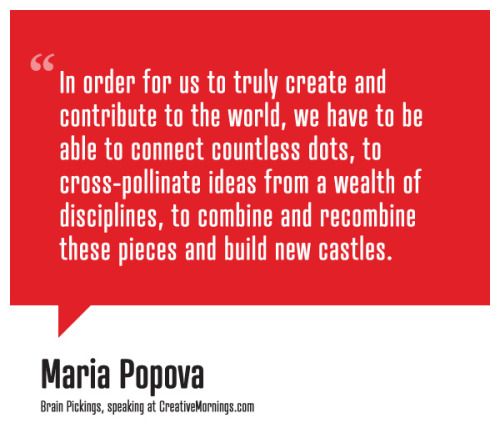
Today I want to sketch and push things out; and to try and get my head around the two concepts in the title. Over to Maria writing here:
"The idea that in order for us to truly create and contribute to the world, we have to be able to connect countless dots, to cross-pollinate ideas from a wealth of disciplines, to combine and recombine these pieces and build new castles.
EU Youth Action Plan, Ctd ROI and NI come together

"Mr Kenny said the Republic and Northern Ireland would work on programmes, and officials and ministers from Northern Ireland would be invited to attend the meeting with the OECD in Dublin in September.
Tánaiste Eamon Gilmore said the Youth Action Plan would be brought forward on a collaborative basis because “irrespective of whether a young person is unemployed in Derry or Dungarvan or Belfast or any other city in Ireland, what they are looking at is an opportunity to get employment, education training or work experience”.
Subscribe to:
Comments (Atom)
