Showing posts with label social media. Show all posts

October 30, 2014

People always lament the present, Ctd


People always lament the present as marked by decay, decadence, degeneration and decline; exhalting the past as one of radiance, rigour and rectitude. Steven Pinker said:
"Every generation thinks that the younger generation is dissolute, lazy, ignorant, and illiterate."
Hiraeth is the adjective which describes a deep nostalgia for the past. It's described like this: "A homesickness for a home to which you cannot return, a home which maybe never was; the nostalgia, the yearning, the grief for the lost places of your past." A commenter on Andrew Sullivan's blog, The Dish, wrote:

June 16, 2014

#FutureOfJournalism - New journalism and hyperlinks

The Independent published an article on how the internet is changing journalism and hyperlinks, yet it didn't include a single hyperlink in it. Look here for a great example of effective use of the hyperlink on the media law blog, Inforrm. Andrew Sullivan said of hyperlinks:
"The superficiality [of a blog] masked considerable depth—greater depth, from one perspective, than the traditional media could offer. The reason was a single technological innovation: the hyperlink… a blogger’s chosen pull quote, unlike a columnist’s, can be effortlessly checked against the original. Now this innovation, pre-dating blogs but popularized by them, is increasingly central to mainstream journalism. 
The blogger can get away with less and afford fewer pretensions of authority. He is—more than any writer of the past—a node among other nodes, connected but unfinished without the links and the comments and the track-backs that make the blogosphere, at its best, a conversation, rather than a production."
With the future of journalism in mind we should turn to the two headline reports. 

One the leaked New York Times innovation report called "one of the key documents of this media age." The guys at Vox looked at the report here.

Two, Sir Howard Stringer’s report for the BBC, here:
"Given Buzzfeed, for example, was only founded in 2006, this raises the question of why the BBC’s global digital reach is not more significant. It is impossible to escape the conclusion that the BBC is punching well below its weight in the digital world."
We should also give a nod to the 2014 Stead Lecture given by James Harding - 'Journalism today'.

Also to the 2014 Charles Wheeler lecture delivered by Robert Peston (@peston) here.

June 02, 2014

David Carr (@Carr2n) - Always lament the present, Ctd


David Carr of the New York Times said (20m):
"This lament about a generation incapable of significant or long thoughts is a hardy perennial that comes up every ten years. Now we're worried about the Millennials. Before that we were worried about the Gen X'ers. Before that it was the punk rockers or the hippies, I forget which, that somehow had lost their ability to think critically about what's going on. I've been both. The problem and the old grampy-pants Pointing a finger at each and I think that we cycle through this." 
Video in full here. He also said here:
"Back in the day, for one thing… you know what, it wasn’t all that great."
Previous post in the series here.

May 30, 2014

The writer can never really stop, Ctd


Edna O'Brien said:
"I think that all writers are like that – your mind is always galloping, trying to write the thing you cannot write. That is one of the characteristics, one of the norms of writing."
Northern Irish poet and writer Nick Laird said in 2005:
"When I was a lawyer… I never stopped writing reviews and poems and articles. I’d do it in my lunch hour or after work. It didn’t matter how tired I was.
In January 2014 Nick said:
"I’m working on poems all the time. I was writing a poem this afternoon, before I came here. I’ve got other work—teaching at Princeton, writing articles and so on—but I’m pretty much always working on a poem." 
Precious post with Christopher Hitchens here.

May 02, 2014

A good blog is your own private Wikipedia


Writing in the New Yorker, Ian Crouch (@iancrouch) wrote an article with an interesting headline, 'The curse of reading and then forgetting.' Ian Crouch explained a recent experience of reading and suddenly remembering:
"Recently, a colleague mentioned that she had been rereading Richard Hughes’s “A High Wind in Jamaica,” which was first published in 1929 and is about a group of creepy little kids who become the unwanted wards of sad, listless pirates. She praised it, and her recommendation sent me to Amazon. The title was familiar, as was the vibrant cover of the New York Review Books reissue. One cent and $3.99 for shipping, and the book was on its way. A couple of weeks later, I opened to the first page and started reading. By the fifth page, I realized that I had read this novel before, and pretty recently, about three years ago, when another colleague had also praised it and lent me his copy."

April 11, 2014

Understanding journalism and the proper role of the Fourth Estate


As Andrew Sullivan said, "Every now and again, it’s perhaps worth revisiting the entire definition of journalism." At present, journalism and the media is out of step with the original and traditional model. The traditional model is based on the premise, as Glenn Greenwald said, that:
"Basic to political science and the American founding and to human nature is that people cannot operate and exercise power without checks or they’ll inevitably abuse it."
As Daniel Ellsberg, the Edward Snowden of the 20th Centruy, said:
"Secrecy corrupts, just as power corrupts." 
Therefore it falls upon journalism and the free press, Edmund Burke's "Fourth Estate", to shine a light upon the powerful and those who want to act in secrecy. Journalists are to be the adversaries and opponents of the powerful. Their job is to be in confrontation against, and not in collaboration with the government. Glenn Greenwald said July 2 2013 on Fox and Friends:
"Thomas Jefferson, 250 years ago, said those who most fear investigations are the ones who attack free press first. This is what journalism is about, shining a light on what the most powerful people in the country are doing to them in the dark. "

April 03, 2014

What a time to be alive - The great opportunity of new media journalism, Ctd


Shane Smith (@ShaneSmith30) co-founder and CEO of Vice (@VICE)

Shane Smith (@ShaneSmith30) said at Internet Week NY 2013 here:
"It’s the best time ever in history to be a content creator."
He also said here:
"It’s shifting towards the content-creator - it’s literally the best time in history... creating content is the best business model out there at the moment."
Interestingly, he sees India as the measure of the future, by grace of its booming youth population:
"As goes India, so shall go the world."
Jonathan Ives, Apple designer, said:
"We are at the beginning of a remarkable time, when a remarkable number of products will be developed. When you think about technology and what it has enabled us to do so far, and what it will enable us to do in future, we’re not even close to any kind of limit. It’s still so, so new."
Shane explained the VICE media model during his Internet Week talk:
"We didn’t start out to be a news company... we started out as an entertainment company. We were sort of pushed into news. A, we enjoy it. B, our audience pushed us into it."

March 27, 2014

The great opportunity of new media journalism


This is for @otrjasona @Jason_A_Murdock @bartoncreeth @LyraMcKee and @dmcbfs. Please watch the video above.

Legacy media is moribund. Legacy media is on a journey of managaed and inexorable decline. It's steady as she sinks. Yes, the relationship between words and money is off. But it will be corrected.

The decline of legacy media isn't all a matter of money. The decline of legacy media is the making of two entirely avoidable circumstances.

One it has lost it's soul. It has capitulated to advertising and public relations. It has been co-opted by those who govern us. As George Orwell said:
"Journalism is printing what someone else does not want printed: everything else is public relations."
Our press isn't this. Our press is flat, serving and servile. It isn't curious or courageous, partisan and adversarial. We need to fix that. Only a vigorous and voracious press will keep countries and governments honest. Our head of government, Peter Robinson wants the press to be more positive and cuddly. But if the press is accountable to Peter Robinson, who is Peter Robinson and our government accountable too?

Two, journalism has failed to iterate and innovate.

March 25, 2014

Will Social Media Change – or Even End – Journalism As We Know It?

[This is a guest post by Sarah Brooks from Freepeoplesearch.org]

"Social media are not so much mere tools as they are the ocean we’re going to be swimming in — at least until the next chapter of the digital revolution comes along."

- Geneva Overholser, for the Nieman Foundation for Journalism at Harvard

Social Media services and websites have experienced phenomenal growth over the last decade – Facebook and Twitter users number in the millions – and the impact of so many people from all walks of life upon the process by which information is shared cannot be overstated. And one area that has likely felt the impact more than any other is the field of journalism.

January 07, 2014

Twitter - A perpetually gaping maw of a gigantic elephant trap


James Delingpole (@JamesDelingpole) wrote an article in The Spectator magazine by the title, 'How Twitter almost destroyed me.' He said of Twitter, (what  he called "the perpetually gaping maw of the gigantic elephant trap that is Twitter), here
"Twitter is a publishing medium more dangerous than any that has ever before existed. The problem is that it is once trivially ephemeral and hideously permanent. Whatever your state of mind, whether you’re drunk or sober, depressed or euphoric, it’s there waiting to capture your every thought from the moment you wake up to the moment you check your Twitter feed one last time before you go to sleep."
He continued:
"You might be a journalist, like me, who writes hundreds of thousands of words’ worth of considered, well-wrought, nuanced articles expressing precisely who you are and where you’re coming from. But as far as the mob is concerned, that makes not the blindest bit of difference. It’s on those 140 characters you’re being tried and condemned. You’re hateful. You’re a misogynist. You’re anti-disabled. You’re a racist. You’re a rapist. Or whatever. And there’s no room for wriggling, you said it, after all. It’s there: in black and white — and ‘favourited’ by various ill-wishers, just in case you try to erase it."

December 17, 2013

Eventually the relationship between words and money will be reconfigured, Ctd

Libby Purves wrote in The Times here:
"We are living through a technology-driven hiccup in which this obvious truth is blurred, as an online generation grows up with the erroneous belief that music, films, streamed TV and news should be as free as air and sunshine. Ironically, this same generation includes an unprecedentedly large proportion who fancy media careers. What do they plan to live on? 
My theory is that by 2020 robust online paywalls will be the norm (probably with micropayments per view) and people will look back at us wonderingly, as we now look back at slavery or the days before driving tests. 
National papers are commercial enterprises with proprietors and shareholders. They can each work out their own destiny, whether by erecting paywalls or through aggressive advertising and data-mining."
Will Self spoke to the same effect on Radio 4 here when he said that, "eventually the relationship between words and money will be reconfigured."

December 14, 2013

Panel - Social media, politics and protest


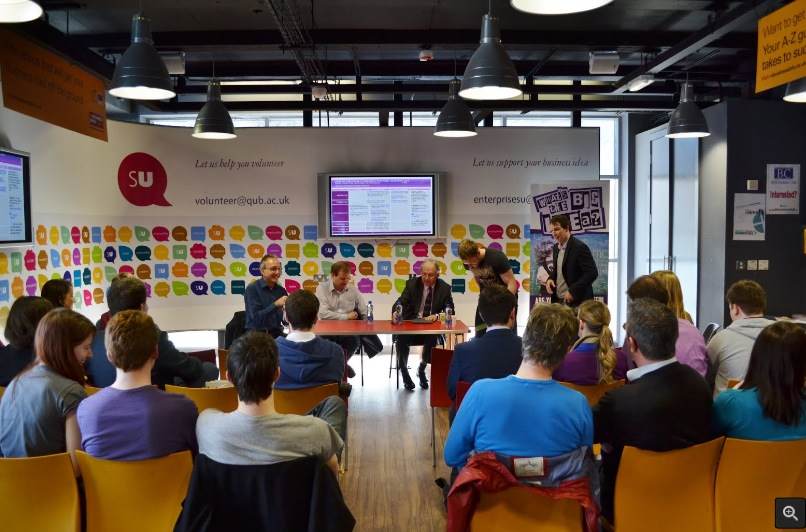
I had the great pleasure of featuring on the panel event, Social Media, Politics & Protests at University of Ulster on social media and civic change on December 10 2013, organised by (@ornayoung). Alan in Belfast (@alaninbelfast) covered the event on Slugger here. Alan in Belfast also has audio here and here. Images from the day here.Tweets from the day via Storify here.

The TCD Social Media panel which preceded this event in October 2013 can be seen here. See my discussion with Sharon O'Neill of UTV on social media law here.

Below is a paraphrased account of my presentation from the UU event:

1. Overview of social media and the rule of law:
"In the last decade we've seen a creative technological explosion. Technology is ubiquitous. Technology has penetrated into every corner of life. It's power lies in the freedom it gives people. The freedom to build and maintain new and old relations, create businesses and overthrow tyrannical governments. 
But this is a two-pronged freedom. Social media gives the freedom to do great good. Social gives the freedom to do great bad. By that formula, social media is both a criminal weapon and a weapon of mass reputational destruction.

December 09, 2013

TCD Social media panel


On Friday 18 October the Political Studies Association of Ireland hosted a conference in Trinity College Dublin which included a panel looking at new media and new politics and their influence on conflict transformation in Northern Ireland. Chaired by Niall Ó Dochartaigh (NUI Galway), I featured alongside Alex Kane (Journalist), Paul Reilly (Uni. of Leicester) and Alan Meban (Political blogger). 

Alan in Belfast covered the event here. See my images of the day and of the event above and below.

November 18, 2013

Adam Wagner on blogging, social media and self-regulation


Adam Wagner was asked here: "The Inquiry would also welcome your views on the extent to which the content of websites, and the manner in which you operate, can be regulated by a domestic system of regulation?"

He responded here:
I do not think blogs can or should be regulated by a domestic system of regulation, for the following reasons: 
a. Practically unworkable: Practically it would be impossible to regulate all blogging. Hundreds of thousands of blogs are set up each day, let alone posts published, and the term is so elastic (see above) that the task would be simply too large and amorphous for any regulator to manage. Even if only popular blogs were targeted, say those over a certain number of hits, what is to stop an individual blogger simply setting up a new blog in order to avoid regulation? I expect that such a system would be simply unworkable. 
b. Current system works: The current system of criminal and civil law already provides a reasonable level of regulation. Bloggers - whether their websites are read by 1 or lm people - are subject to financial penalties for libel or quasi-criminal sanctions if they commit a contempt of court. See for example the case of Elizabeth Watson, referred to be below, who was sentenced to 9 months imprisonment (later suspended) for breaching a court order through information published on her personal website. That being said, I also note a 1 February 2012 report in The Independent that Mr Justice Peart has said in relation to an Irish case involving the www.rate-yoursolicitor.com website that "The civil remedies currently available have recently been demonstrated to be an inadequate means of prevention and redress".

October 04, 2013

Why does everyone want to go to Law School? Ctd Laura Olin


Laura Olin, that girl behind Obama's social media strategy for Obama 2012, made an interesting observation on the everybody's collective dystopic, zombie drift towards Law School. She gave a biographical overview in note form:
"Devote a few words to early, fairly stupid inclination to be a lawyer, explaining two years at a civil rights legal nonprofit."

June 15, 2013

Christopher Hitchens - The authority of bloggers


At 7 minutes 30 seconds in the video above and here Christopher Hitchens talks about the authority of the online writers.
"I became a journalist because I didn't want to have to rely on the press for information. I'm very sorry for people who do think that's what they're getting when they buy the New York Times in the morning. I only read it to make sure I know what everyone else thinks is going on. It's useful to know what people think is the news. None of my sources are from the press... Yes, from bloggers and their allies I get most of what I think I need to know and I'm very happy at the possibility of, the evident likelihood now of the decline of the networks and of the flagship newspapers, which seem to me to be engines of reassurance and consensus and bad writing, poor English. Let it all die, I don't give a damn."


In an earlier post here on how Hitchens write, Christopher said: "I don’t use any of the new technology stuff."

April 23, 2013

Digital Human: Do You Participate in the New Digital World?


The birth of the internet has heralded a new Age: the Age of Digitalism. An Age that has seen the wondrous and insatiable creep of digital. In less that a decade digital has woven itself into every aspect of our daily lives. This Digital Age has also ushered in a new and exciting world for all of humankind to explore – a limitless plain of untouched Digital Land for man and woman to colonise and stake claim to.
Think about it: like the frontiersmen who forged into the uncharted plains of North America, men and women all around the world are pulling back layers of untouched Digital Land.
And you too can be part of this exciting Digital World. You too can stake claim to a patch of rich land for not even a penny piece. You can cultivate your Digital land with your thoughts, opinions, pictures, videos, skills, ingenuity and enterprise. For those with restless ambition the possibilities of this new Digital World are limitless. You can achieve whatever you so wish; it’s just up to you to decide what you want to make of it.
But there are those among us who choose to reject this New World. There are those who choose not to stake their claim to the virgin land. There are also those who have staked a claim – they may have a website, social media account or blog – but they do not till their Digital Land. They choose to leave it barren. And for their inaction the digitally idle will lose out on all benefits that the Digital World holds.
We are living in a restless world where the infrastructure, both real world and digital, is changing before our very eyes. Participate and you could reap limitless personal and professional success. Ignore it and you could be left behind.
[This blog was inspired by Radio 4's Digital Human Series and was originally published on my business blog, Twitter for Law Firms in November 2012]

March 01, 2013

Interview with Mike Gilson: has Digital Killed the Print Media Star?

Mike Gilson, editor of the Belfast Telegraph

Related Posts Plugin for WordPress, Blogger...