Showing posts with label media. Show all posts

October 22, 2014

Joseph Pulitzer on the proper role of journalism

Cartoon of Joseph Pulitzer cartoon. More here.
Joseph Pulitzer was a Hungarian-American Jewish reporter turned newspaper owner, who owned the St. Louis Post Dispatch and the New York World. Joseph Pulitzer introduced the techniques of "new journalism" to the newspapers he acquired in the 1880s. His legacy lives on most prominently through the annual Pulitzer Prize and in an awareness of what the real role of the journalist is. He said that the role of journalism and the fourth estate is:
"An institution that should always fight for progress and reform, never tolerate injustice or corruption, always fight demagogues of all parties, never belong to any party, always oppose privileged classes and public plunderers, never lack sympathy with the poor, always remain devoted to the public welfare, never be satisfied with merely printing news, always be drastically independent, never be afraid to attack wrong, whether by predatory plutocracy or predatory poverty."
Joseph Pulitzer, May 10, 1883, quoted on the Times plaque. My previous post on the role of journalism here.
 

October 02, 2014

Shane Smith - The media and establishment is inherently conservative


In 1993 Christopher Hitchens said, "there is one party - that is a beltway party, a Washington party, a permanent party, the party of those in power and most of those in the leadership of the Washington equipe of which the press are members of it and proud of it and lucky and afraid of the possibility of falling out of favour." Shane Smith also speaks critically of the US politico-media establishment. He said:

June 16, 2014

#FutureOfJournalism - New journalism and hyperlinks

The Independent published an article on how the internet is changing journalism and hyperlinks, yet it didn't include a single hyperlink in it. Look here for a great example of effective use of the hyperlink on the media law blog, Inforrm. Andrew Sullivan said of hyperlinks:
"The superficiality [of a blog] masked considerable depth—greater depth, from one perspective, than the traditional media could offer. The reason was a single technological innovation: the hyperlink… a blogger’s chosen pull quote, unlike a columnist’s, can be effortlessly checked against the original. Now this innovation, pre-dating blogs but popularized by them, is increasingly central to mainstream journalism. 
The blogger can get away with less and afford fewer pretensions of authority. He is—more than any writer of the past—a node among other nodes, connected but unfinished without the links and the comments and the track-backs that make the blogosphere, at its best, a conversation, rather than a production."
With the future of journalism in mind we should turn to the two headline reports. 

One the leaked New York Times innovation report called "one of the key documents of this media age." The guys at Vox looked at the report here.

Two, Sir Howard Stringer’s report for the BBC, here:
"Given Buzzfeed, for example, was only founded in 2006, this raises the question of why the BBC’s global digital reach is not more significant. It is impossible to escape the conclusion that the BBC is punching well below its weight in the digital world."
We should also give a nod to the 2014 Stead Lecture given by James Harding - 'Journalism today'.

Also to the 2014 Charles Wheeler lecture delivered by Robert Peston (@peston) here.

June 02, 2014

David Carr (@Carr2n) - Always lament the present, Ctd


David Carr of the New York Times said (20m):
"This lament about a generation incapable of significant or long thoughts is a hardy perennial that comes up every ten years. Now we're worried about the Millennials. Before that we were worried about the Gen X'ers. Before that it was the punk rockers or the hippies, I forget which, that somehow had lost their ability to think critically about what's going on. I've been both. The problem and the old grampy-pants Pointing a finger at each and I think that we cycle through this." 
Video in full here. He also said here:
"Back in the day, for one thing… you know what, it wasn’t all that great."
Previous post in the series here.

May 30, 2014

The writer can never really stop, Ctd


Edna O'Brien said:
"I think that all writers are like that – your mind is always galloping, trying to write the thing you cannot write. That is one of the characteristics, one of the norms of writing."
Northern Irish poet and writer Nick Laird said in 2005:
"When I was a lawyer… I never stopped writing reviews and poems and articles. I’d do it in my lunch hour or after work. It didn’t matter how tired I was.
In January 2014 Nick said:
"I’m working on poems all the time. I was writing a poem this afternoon, before I came here. I’ve got other work—teaching at Princeton, writing articles and so on—but I’m pretty much always working on a poem." 
Precious post with Christopher Hitchens here.

May 02, 2014

A good blog is your own private Wikipedia


Writing in the New Yorker, Ian Crouch (@iancrouch) wrote an article with an interesting headline, 'The curse of reading and then forgetting.' Ian Crouch explained a recent experience of reading and suddenly remembering:
"Recently, a colleague mentioned that she had been rereading Richard Hughes’s “A High Wind in Jamaica,” which was first published in 1929 and is about a group of creepy little kids who become the unwanted wards of sad, listless pirates. She praised it, and her recommendation sent me to Amazon. The title was familiar, as was the vibrant cover of the New York Review Books reissue. One cent and $3.99 for shipping, and the book was on its way. A couple of weeks later, I opened to the first page and started reading. By the fifth page, I realized that I had read this novel before, and pretty recently, about three years ago, when another colleague had also praised it and lent me his copy."

April 11, 2014

Understanding journalism and the proper role of the Fourth Estate


As Andrew Sullivan said, "Every now and again, it’s perhaps worth revisiting the entire definition of journalism." At present, journalism and the media is out of step with the original and traditional model. The traditional model is based on the premise, as Glenn Greenwald said, that:
"Basic to political science and the American founding and to human nature is that people cannot operate and exercise power without checks or they’ll inevitably abuse it."
As Daniel Ellsberg, the Edward Snowden of the 20th Centruy, said:
"Secrecy corrupts, just as power corrupts." 
Therefore it falls upon journalism and the free press, Edmund Burke's "Fourth Estate", to shine a light upon the powerful and those who want to act in secrecy. Journalists are to be the adversaries and opponents of the powerful. Their job is to be in confrontation against, and not in collaboration with the government. Glenn Greenwald said July 2 2013 on Fox and Friends:
"Thomas Jefferson, 250 years ago, said those who most fear investigations are the ones who attack free press first. This is what journalism is about, shining a light on what the most powerful people in the country are doing to them in the dark. "

March 05, 2014

Glenn Greenwald on the abuse of state power through terror laws


Glenn Greenwald said here of the lessons learnt from the Church Committee:
"The lesson of the Church Committee from the 1970s is that when you allow people in government to spy on Americans in the dark with no accountability and without warrant, they abuse that power and that’s what’s happened; it’s rampant abuse and it needs sunlight."
Glenn Greenwald has previously also cited Cicero who said: "Laws are silent in times of war." Andrew Sullivan (@sullydish) said of Glenn Greenwald and the abuse of terrror laws:

"In this respect, I can say this to David Cameron. Thank you for clearing the air on these matters of surveillance. You have now demonstrated beyond any reasonable doubt that these anti-terror provisions are capable of rank abuse. Unless some other facts emerge, there is really no difference in kind between you and Vladimir Putin. You have used police powers granted for anti-terrorism and deployed them to target and intimidate journalists deemed enemies of the state. 
You have proven that these laws can be hideously abused. Which means they must be repealed. You have broken the trust that enables any such legislation to survive in a democracy. By so doing, you have attacked British democracy itself. What on earth do you have to say for yourself? And were you, in any way, encouraged by the US administration to do such a thing?"

February 05, 2014

Arm folding and mirror holding, Ctd Northern Ireland needs Ian Knox and more satirists


In an article 'Comedy as a Weapon' published in The American Thinker, the power and influence of US political cartoonist Herb Block was explained:
"Thanks to people like Herb Block and his ilk, McCarthy became an American laughingstock, allowing communism and socialism to become "cool" in Hollywood, while Conservatives became unofficially "blacklisted." Sixty years later his methods of using humor and sarcasm for social influence are a template for those still seeking to destroy conservative values."
Herb Block popularised the term "McCarthyism" and through his cutting cartoons managed to discredit and pull down the entire edifice of the McCarthy enterprise, as he did with the cartoon above which helped Herb Block to win the Pulitzer Prize.

February 04, 2014

Arm folding and mirror holding, Ctd The power of the political cartoonist


Menzies Campbell said:
"Cartoons are a traditional feature of British political coverage and the cartoonist's pen stroke has often conveyed judgments more deadly than anything journalists would dare to express."
They're called "ink-stained assassins" for a reason, as The News Statesman put it here. As Diane Abbott said:
"The idea of John Major in his underpants: he used that over and over and it became part of the political lexicon. It spoke of his timidity, caution and greyness."
Likewise, of Ed Miliband, Tim Benson wrote in the book 'The Best of Britain's Political Cartoons 2013':
"[Peter] Brooke's believes that [Ed Miliband's] comparison with Wallace has damaged Miliband's chances of ever becoming prime minister. This is because, like Wallace, Miliband's also appears hapless, making the public's perception of him unsuitable prime ministerial material."

January 17, 2014

The surrender of journalism to PR

 
Andrew Sullivan said at the end of 2013 here:
"The surrender of journalism to advertizing and public relations – not alliance with, but surrender to – was the biggest media story of 2013 that the media almost didn’t cover at all."

December 17, 2013

Eventually the relationship between words and money will be reconfigured, Ctd

Libby Purves wrote in The Times here:
"We are living through a technology-driven hiccup in which this obvious truth is blurred, as an online generation grows up with the erroneous belief that music, films, streamed TV and news should be as free as air and sunshine. Ironically, this same generation includes an unprecedentedly large proportion who fancy media careers. What do they plan to live on? 
My theory is that by 2020 robust online paywalls will be the norm (probably with micropayments per view) and people will look back at us wonderingly, as we now look back at slavery or the days before driving tests. 
National papers are commercial enterprises with proprietors and shareholders. They can each work out their own destiny, whether by erecting paywalls or through aggressive advertising and data-mining."
Will Self spoke to the same effect on Radio 4 here when he said that, "eventually the relationship between words and money will be reconfigured."

June 20, 2013

Christopher Hitchens - A writer can never truly stop


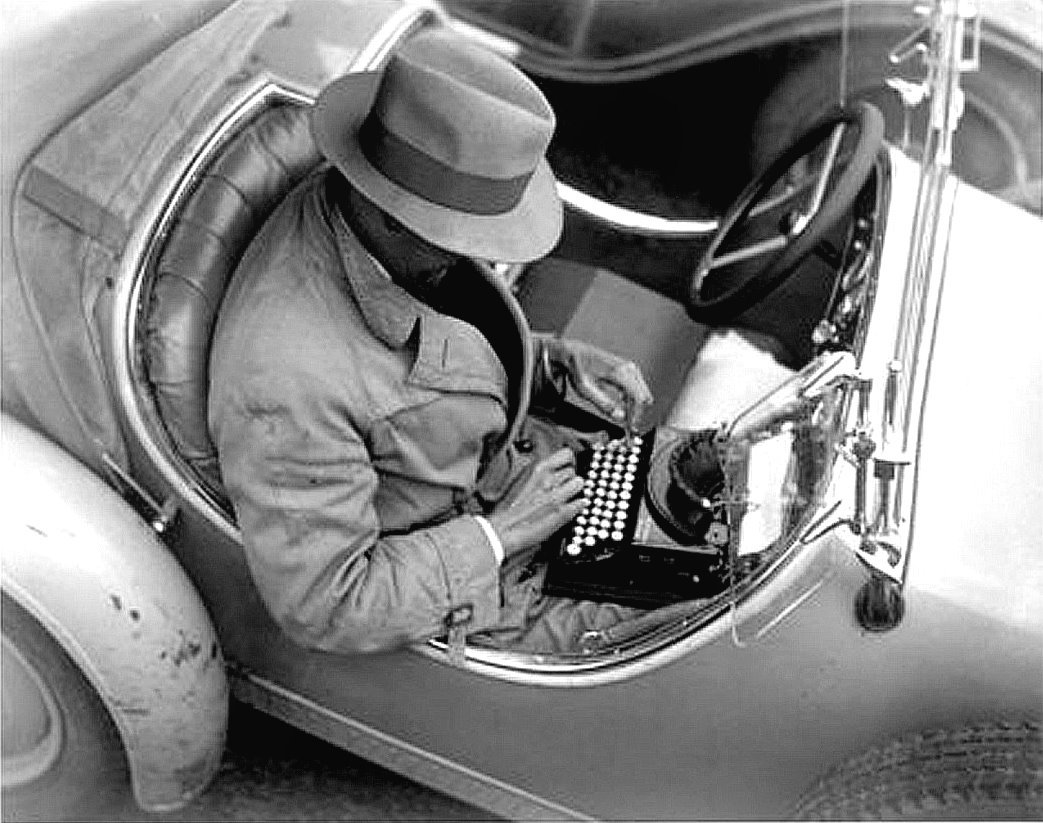
Speaking on C-Span, Christopher Hitchens explained how a writer can never truly stop or switch off. For a writer is a professional without a set clock. A writer is person with a vocation who is always absorbing so that he or she can then hold a mirror up to society. A writer is above all this: a person with the responsibility to use their gift for they occupy an important role in society.
"If you’re a self-employed writer, there’s a tendency to always feel guilty anytime you’re not working, because you never quite know when you’ve stopped because you don’t have office hours or an employer."
From 22 minutes in the video above, also here. Also here.
Related Posts Plugin for WordPress, Blogger...